
Olive Tree Cultivated Varieties
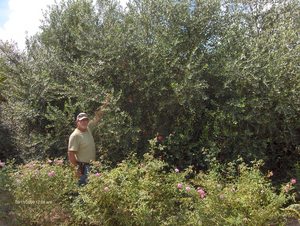
Olive tree hedge of five different cultivars
Our Cast of Venerable Characters has been these cultivars and others:
*Arbequina *Arbosana *Chemlali *Coratina
*Frantoio *Leccino*Pendolino
*Picual *Picholine *Santa Caterina
*Seedling (Wild Olive)
*Seedling (Wild Olive)
As of 2023, our inventory consists of almost entirely Arbequina trees in 65-gallon and larger pots.
Arbequina
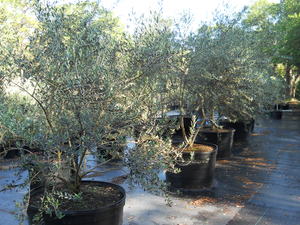 A small tree (20'). Self-fertile and a good pollinator for other cultivars. Starts fruiting early (4 years). Relatively cold hardy. Widely adaptable. Small fruit but very small pit, so has a surprising amount of flesh.
Origin: Spain (Catalonia)
*******************************************************
THE TASTE OF PICKLED OLIVES HAS MUCH
MORE TO DO WITH THE PROCESS AND RECIPE
USED THAN THE CULTIVAR OF OLIVE
*******************************************************
Arbosana
Semi-dwarf cultivar (20'). Vigorous. Bushy growth habit. Medium-sized fruit.Origin: Spain
Pendolino
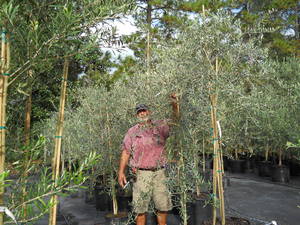
Pendolino
Origin: Central Italy
Picual
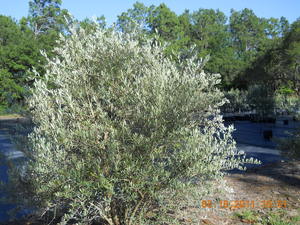
Picual
Origin: Spain
Santa Caterina
Large, spreading tree with large fruit. Needs a pollinator.Origin: Italy
Seedlings (Wild Olive)
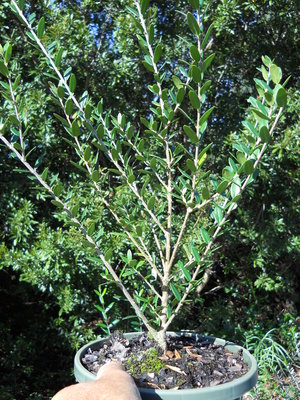
Seedling olive tree